
Throughout my adult life, I have fought for the right to be recognized as a woman in modern Western society.
I have held different political views, lost loved ones along the way, traveled the world, experienced varying social status in different countries, participated in multiple religious groups, worked in sex work, faced war and displacement – and all this while continuing to fight for the right to be myself in the modern world.
Along this journey, I noticed that many other women also struggle against the norms of society. They fight for the right to be themselves, to own their bodies, to feel safe, and to have social status and authority equal to that of men.
To find inner harmony and help others on this path, I spent more than ten years studying femininity and discovered valuable insights that I wish to share with you.
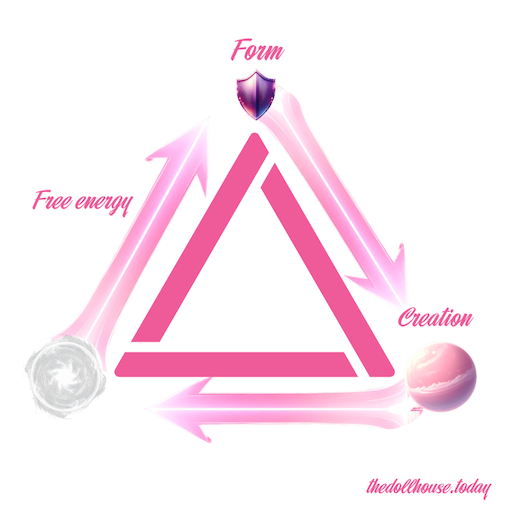
In my research on creation myths and the creative female archetypes of ancient cultures, I was able to conceptualize The Cycle of Creation, a pattern found in nearly all ancient civilizations.
In Sumerian culture, the goddess Inanna embodied cosmic life force, which manifested in the world through symbols and forms.
In Vedic tradition, the creative energy Shakti – the primordial force of the universe – manifests through various forms of the goddess, bringing forth life and order.
In Gnostic philosophy, a similar process can be seen in the figure of the aeon Sophia, through whom divine wisdom strives to manifest in the material world.
These examples reflect the same archetypal process: energy taking form and creating reality.
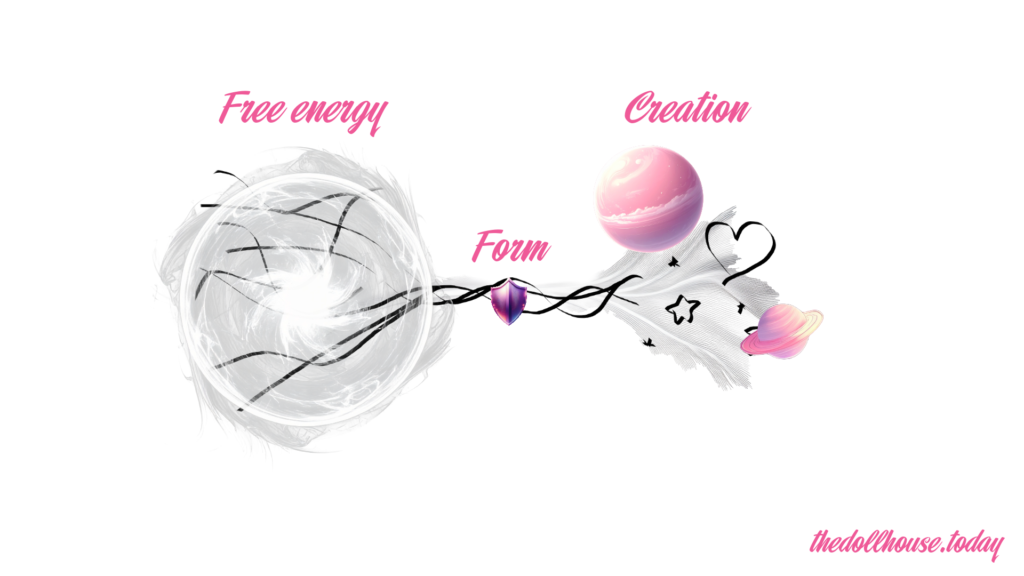
Creative energy, of course, does not have a specific gender. Yet, due to its generative nature and association with the female capacity to create life, ancient civilizations often embodied it in female archetypes.
Through years of personal practice and working with others, I observed that we are all a product, a part, and a continuation of this cycle, and that our inner fulfillment and balance directly depend on how aligned we are with it.
Drawing on the philosophical principles of the Cycle of Creation and archetypal identification, I created The Doll Manifesto to unite principles that allow any woman to harmonize her life and cultivate greater inner balance.
The word “manifesto” means a public declaration containing a program of actions and values to follow.
Accordingly, The Doll Manifesto is a system of values and principles designed to enhance femininity and, through its manifestation, foster inner harmony and outer success, grounded in one of the most ancient female archetypes.
Why “Doll”?
I chose the word “Doll” because it is elegant and beautiful, carries a powerful symbolism of refined femininity, and creates a sense of aesthetic sisterhood among women who choose this path.
The word “Doll” conveys aesthetics, softness, care, and sensuality – the energy of creation. In this context, however, it is not about objectifying women, but about their conscious choice to be feminine and creative.
In the United States during the 1980s, the term “Doll” was used in queer culture to refer to hyper-feminine trans women who maximized their femininity and fought for the right to express it despite social oppression.
I use the word “Doll” as a symbol of the manifestation of the strongest feminine expressions, including all women who consciously choose to express and celebrate their femininity.
How to Use The Doll Manifesto
By reading and understanding this manifesto, you gain a tool to achieve greater harmony in your life.
It can also serve as a universal moral code and guide for any woman.
By engaging with its principles, you balance and harmonize your feminine energy and attune yourself to its postulates.
You may also use this manifesto as a list of topics to explore with your therapist or in any other self-improvement practice.
If you wish for this manifesto to become a deeper part of your spiritual life, you may want to become a Doll and take the Doll Vow. This gives it sacred power, significantly amplifying the influence of the manifesto in your life.
Vows can be found in almost all religious practices of both ancient and modern times – and they truly work.
For those who doubt the spiritual nature or effectiveness of vows, I recommend reading about the Commitment and Consistency Principle by Robert Cialdini – an American psychologist and member of the National Academy of Sciences – as well as related research available online.